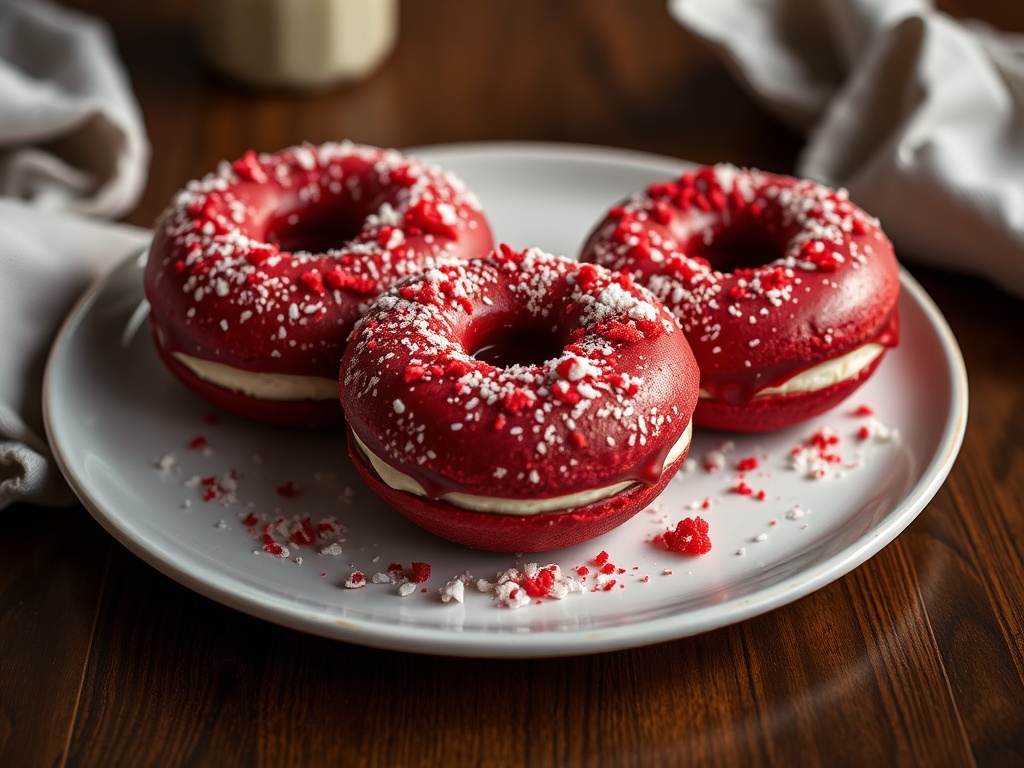
Baked Red Velvet Doughnuts
Introduction
Prepare to indulge your senses without the usual guilt! Today, we’re diving headfirst into the irresistible world of Baked Red Velvet Doughnuts – a treat so enchanting, it’s destined to become your new favorite. Forget the deep-fryer; these beauties are baked to tender perfection, offering a lighter, airier texture that still delivers all the classic red velvet charm we know and love. They’re not just a breakfast pastry; they’re a celebration in every bite, perfect for brightening any morning, elevating an afternoon tea, or serving as a delightful dessert.
What makes these doughnuts truly special is their harmonious blend of flavors and textures. Each bite promises a moist, lightly sweet crumb with that signature hint of cocoa, all brought together by the iconic vibrant red hue. But the magic doesn’t stop there. A luscious, tangy cream cheese glaze cascades over each doughnut, providing the quintessential sweet and savory counterpoint that defines true red velvet indulgence. This recipe is designed to be straightforward and accessible, proving that impressive, homemade treats don’t have to be complicated. Whether you’re a seasoned baker or a kitchen novice, you’ll find joy in crafting these festive, easy-to-make doughnuts, perfect for holidays, special occasions, or simply to satisfy a craving for something truly delicious.
The allure of red velvet dates back generations, with its distinctive color originally born from a fascinating chemical reaction between cocoa powder, buttermilk, and vinegar. While modern recipes often enhance the color with food coloring, the rich history and decadent flavor profile remain. Our baked version offers a healthier alternative to traditional fried doughnuts, making them an ideal choice for those seeking indulgence without the heavy feeling. The tender crumb, subtle cocoa notes, and the essential tangy cream cheese glaze create a taste profile that is both comforting and sophisticated. These doughnuts are more than just a sweet treat; they are a testament to the fact that homemade goodness, especially when it comes to red velvet, is always the best kind of delicious.
Nutritional Information
Per serving (approximate values):
- Calories: 285
- Protein: 4g
- Carbohydrates: 38g
- Fat: 13g
- Fiber: 1g
- Sodium: 250mg
Ingredients
- For the Doughnuts:
- 1 ½ cups all-purpose flour
- 2 tablespoons Dutch-processed cocoa powder
- ¾ cup granulated sugar
- 1 ½ teaspoons baking powder
- ½ teaspoon baking soda
- ¼ teaspoon salt
- ½ cup buttermilk
- 2 large eggs
- 1 teaspoon vanilla extract
- 1-2 tablespoons red gel food coloring (start with 1, add more for desired vibrancy)
- ¼ cup vegetable oil or melted unsalted butter
- For the Cream Cheese Glaze:
- 4 ounces cream cheese, softened
- 2 cups powdered sugar, sifted
- 2-3 tablespoons milk or heavy cream
- ½ teaspoon vanilla extract
- Pinch of salt
Instructions
- Preheat your oven to 350°F (175°C). Lightly grease a 6-cavity standard doughnut pan with non-stick cooking spray or butter.
- In a large mixing bowl, whisk together the all-purpose flour, Dutch-processed cocoa powder, granulated sugar, baking powder, baking soda, and salt. Make sure there are no lumps and the ingredients are well combined.
- In a separate medium bowl, whisk together the buttermilk, eggs, vanilla extract, red gel food coloring, and vegetable oil (or melted butter) until smooth and thoroughly combined. Ensure the food coloring is evenly dispersed.
- Pour the wet ingredients into the dry ingredients. Using a rubber spatula or whisk, mix until just combined. Be careful not to overmix the batter, as this can lead to tough doughnuts. A few small lumps are acceptable.
- Transfer the doughnut batter to a piping bag fitted with a round tip, or simply snip off the corner of a Ziploc bag. Alternatively, you can carefully spoon the batter into the prepared doughnut pan. Fill each cavity about two-thirds full to prevent overflow during baking.
- Bake for 9-12 minutes, or until the doughnuts spring back lightly when touched and a toothpick inserted into one comes out clean. Baking times may vary depending on your oven.
- Remove the doughnut pan from the oven and let the doughnuts cool in the pan for 5 minutes. This helps them firm up and prevents sticking.
- Carefully invert the pan to release the doughnuts onto a wire cooling rack. Allow them to cool completely before glazing.
- While the doughnuts are cooling, prepare the cream cheese glaze. In a medium bowl, beat the softened cream cheese with an electric mixer until smooth and creamy.
- Gradually add the sifted powdered sugar, beating until fully incorporated.
- Add 2 tablespoons of milk or heavy cream, the vanilla extract, and a pinch of salt. Beat until the glaze is smooth and has a pourable, yet thick, consistency. If the glaze is too thick, add more milk a teaspoon at a time until desired consistency is reached. If it’s too thin, add a little more powdered sugar.
- Once the doughnuts are completely cool, dip the top of each doughnut into the cream cheese glaze, allowing the excess to drip off. You can also drizzle the glaze over the doughnuts with a spoon for a more rustic look.
- Place the glazed doughnuts back on the wire rack to allow the glaze to set, which typically takes about 15-20 minutes.
- Serve immediately and enjoy your delicious homemade Baked Red Velvet Doughnuts!
Cooking Tips and Variations
For the most vibrant red color, always opt for gel food coloring over liquid. Gel coloring is more concentrated and won’t thin out your batter. Start with the recommended amount and add more in small increments until you achieve your desired shade. Remember, the color often intensifies slightly during baking.
Using Dutch-processed cocoa powder is highly recommended for red velvet. It has a milder, less acidic flavor than natural cocoa, which allows the red color to shine through more effectively and contributes to a deeper, richer chocolate note without overwhelming the delicate red velvet flavor. If you only have natural cocoa, the doughnuts will still be delicious but may appear a bit browner.
Buttermilk is a cornerstone of classic red velvet, providing tenderness and a subtle tang. If you don’t have buttermilk on hand, you can easily make a substitute: simply add 1 tablespoon of fresh lemon juice or white vinegar to a liquid measuring cup, then fill the rest of the cup with regular milk until it reaches the ½ cup mark. Let it sit for 5-10 minutes until it slightly curdles before using.
To ensure your doughnuts are light and airy, avoid overmixing the batter. Mix only until the dry ingredients are just incorporated into the wet. Overmixing develops the gluten in the flour, leading to a tougher texture. A few small lumps in the batter are perfectly fine.
A piping bag is your best friend when it comes to filling doughnut pans. It allows for neat and even distribution of the batter, preventing spills and ensuring uniformly shaped doughnuts. If you don’t have a piping bag, a large resealable plastic bag with a corner snipped off works just as well.
For the glaze, ensure your cream cheese is softened to room temperature. This will help it whip up smoothly without lumps. If your glaze seems too thick, add milk or cream a teaspoon at a time until it reaches the desired consistency. If it’s too thin, gradually whisk in more sifted powdered sugar. For an extra touch of richness, use heavy cream instead of milk in the glaze.
Don’t overbake your doughnuts! They should be lightly golden on the edges and spring back when gently pressed. Overbaking will result in dry doughnuts. Since oven temperatures can vary, keep a close eye on them during the last few minutes of baking.
For a fun variation, consider adding a sprinkle of mini chocolate chips to the batter before baking, or finely chopped pecans for a nutty crunch. You can also garnish the glazed doughnuts with red velvet crumbs (if you have an extra doughnut you don’t mind crumbling), chocolate shavings, or festive sprinkles for an extra decorative touch.
Storage and Reheating
Baked Red Velvet Doughnuts are always best enjoyed fresh on the day they are made, especially with their delicate texture and fresh glaze. However, if you have leftovers or wish to prepare them slightly ahead, proper storage will help maintain their quality.
To store glazed doughnuts, place them in an airtight container. If you need to stack them, separate layers with parchment paper to prevent the glaze from sticking. Store at room temperature for up to 1-2 days. For longer storage, you can refrigerate them for up to 3-4 days. Be aware that refrigeration can sometimes alter the texture of baked goods, making them a bit firmer, and the glaze may become slightly tacky or condensed.
If you prefer to make the doughnuts ahead of time without glazing, store the plain, cooled doughnuts in an airtight container at room temperature for up to 2 days, or in the refrigerator for up to 5 days. You can also freeze unglazed doughnuts for up to 2-3 months. To freeze, wrap each cooled doughnut individually in plastic wrap, then place them in a freezer-safe bag or container. Thaw at room temperature and then prepare the glaze just before serving.
The cream cheese glaze can be made in advance and stored separately. Transfer the glaze to an airtight container and refrigerate for up to 5 days. Before using, allow it to come to room temperature and give it a good whisk to restore its smooth consistency. You might need to add a tiny splash of milk or cream if it has thickened too much.
While these doughnuts are delightful at room temperature, if you’ve refrigerated them and prefer a warm treat, you can gently reheat unglazed doughnuts. Place them on a baking sheet and warm in a preheated oven at 300°F (150°C) for 3-5 minutes, or microwave for 10-15 seconds. Be cautious not to overheat, as this can dry them out. Glazed doughnuts are generally not recommended for reheating in the oven or microwave as the glaze will melt and become messy. It’s best to enjoy glazed doughnuts at room temperature or slightly chilled.
Frequently Asked Questions
What is the difference between baked and fried doughnuts?
The primary difference lies in their cooking method and resulting texture. Fried doughnuts are cooked in hot oil, which gives them a crispy exterior and a chewy, airy interior, often with a slightly greasy mouthfeel. Baked doughnuts, like these Red Velvet ones, are cooked in an oven, resulting in a cake-like texture that is softer, more tender, and less oily. They are generally considered a lighter and healthier alternative to their fried counterparts.
Why did my doughnuts turn out dry?
Dry doughnuts are most commonly caused by overbaking or overmixing the batter. Overbaking evaporates too much moisture from the dough, making it tough and dry. Keep a close eye on them during the last few minutes of baking and remove them from the oven as soon as a toothpick inserted comes out clean. Overmixing develops the gluten in the flour too much, which also leads to a tougher, drier texture. Mix the wet and dry ingredients only until just combined.
Can I make these doughnuts without red food coloring?
Absolutely! The red food coloring primarily serves an aesthetic purpose, giving the doughnuts their signature vibrant hue. If you prefer to omit it, your doughnuts will still have the delicious red velvet flavor profile from the cocoa powder, buttermilk, and vanilla, but they will have a light brown color rather than bright red. Some natural color might come through from the reaction of cocoa with buttermilk and baking soda, but it won’t be as intense as with food coloring.
My cream cheese glaze is too thin/thick. How can I fix it?
Adjusting the consistency of your glaze is simple. If your glaze is too thin, gradually whisk in more sifted powdered sugar, a tablespoon at a time, until it reaches your desired thickness. If it’s too thick, add a tiny bit more milk or cream, about a teaspoon at a time, whisking well after each addition, until it reaches a pourable but still rich consistency. Always make adjustments slowly to avoid overcorrecting.
